
Causes
Due to the nature of the TMJ in the way it functions, the joint is one of the most prone to injury. The symptoms of TMD can gradually appear with no apparent cause. However, experts have named the major causes to be:
- Trauma. Trauma is divided into microtrauma and macrotrauma. Microtrauma is internal, such as bruxism and clenching (jaw tightening). This continual hammering on the temporomandibular joint can change the alignment of the teeth. Bruxism and
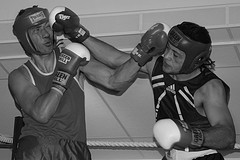 clenching are habits that may be diagnosed in people who complain of pain in the temporomandibular joint or have facial pain that includes the muscles involved in chewing (myofascial pain). Macrotrauma, such as a punch to the jaw or impact in an accident, can break the jawbone or damage the disc.
|
Boxing punch image courtesy of |
- Rheumatoid arthritis. Rheumatoid arthritis causes inflammation in joints and can affect the TMJ, especially in children. As it progresses, the disease can cause destruction of cartilage, erode bone and the deforming joints. It is an autoimmune disease involving the antibody factor against immunoglobulin G (IgG). Chronic rheumatoid arthritis is a multisystem inflammatory disorder with persistent symmetric joint inflammation.
- Stress may be physical, psychological or both. Physiological changes can produce muscle tightness and pain and if you are subjected to chronic stress, these physical changes may produce harmful effects. For example, people subjected to chronic stress develop ulcers, diarrhea, tension headaches, muscle tightness and other physical symptoms. Muscles tighten, teeth clench and/or abnormal pressure is forced against the TMJ disc, and if the ligaments are weak or if the patient is one that has ligament laxity, then the disc may dislocate. Also people who are under stress frequently biuild up unreleased nervous energy. It is very common for people under stress to release this nervous energy by either consciously or unconsciously grinding and clenching their teeth.
- Malocclusion can also lead to a misdiagnosis of a migraine. There is little discrepancy in the way the teeth fit together and the way the TMJ fits, with a discrepancy of 0.001 inches. The body tries to correct the changes which can lead to muscle spasms of the muscles around the joint and also the head and neck.
Others causes may include excessive gum chewing and jaw clicking which can trigger TMD, however these causes are disputed by the experts in the field. Jaw clicking tends to be the most disputed as there is no scientific evidence to back this up, as it is common in the general population.